
Introduction
For years, programming meant one thing: writing code line by line.
But in 2026, that paradigm is shifting fast.
With the rise of AI tools, developers can now build full-stack applications using natural language prompts instead of manually writing every function, API, or UI component.
- You describe what you want.
- AI generates the code.
But this raises an important question:
- If AI can write code, what skill actually matters now?
The answer is simple:
- System design.

The Shift: From Writing Code to Describing Systems
Modern development is no longer about syntax mastery.
It’s about:
- Defining problems clearly
- Structuring systems logically
- Guiding AI effectively
Instead of saying:
“Write a function to validate user input”
You now say:
“Build a login system with validation, error handling, and secure authentication”
AI handles the implementation—but you define the system.
What is Natural Language Development?
Natural language development is the process of building applications by describing functionality in plain English (or any human language).
AI tools interpret your instructions and generate:
- Frontend code
- Backend logic
- APIs
- Database structures
Example:
Prompt:
“Create a task management app with user login, task tracking, and deadline reminders.”
Output:
- UI components
- Backend logic
- Database schema
From idea to working app in minutes.
Why System Design Matters More Than Syntax
In traditional development:
- Syntax = core skill
In AI-assisted development:
- Syntax = handled by AI
- System design = handled by YOU
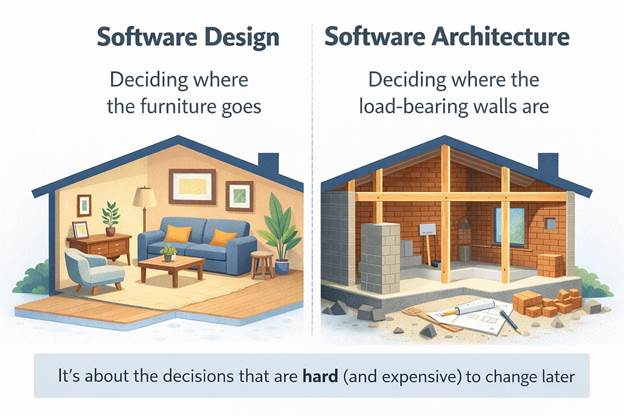
Key Differences
| Skill | Before | Now |
| Syntax | Essential | Assisted by AI |
| Debugging | Manual | AI-assisted |
| System Design | Secondary | Primary |
| Problem Solving | Important | Critical |
What is System Design in This Context?
System design is the ability to:
- Break down a problem
- Define architecture
- Decide components and interactions
Example:
Instead of coding directly, you think:
- What features are needed?
- How will users interact?
- What data is required?
- How will components connect?
This clarity drives better AI outputs.
Building a Full-Stack App Using Natural Language
Let’s look at a simplified workflow:
Step 1: Define the Idea
Be specific.
❌ “Build an app”
✅ “Build a task manager with login, deadlines, and reminders”
Step 2: Structure the System
Break it into parts:
- Frontend: UI for tasks
- Backend: Logic for task handling
- Database: Store tasks and users
Step 3: Use AI to Generate Code
Prompt example:
“Build a full-stack task manager using React, Node.js, and MongoDB with authentication and CRUD functionality.”
Step 4: Iterate and Improve
Ask AI to:
- Add features
- Fix bugs
- Optimize UI
Development becomes iterative.
The Rise of “Vibe Coding” (But With Structure)
Many developers now rely on vibe coding—describing what they want and letting AI handle the rest.
But here’s the problem:
Without structure, vibe coding leads to:
- Messy code
- Poor architecture
- Hard-to-scale systems
With system design, it becomes:
- Efficient
- Scalable
- Professional
Tools Enabling Natural Language Development
Popular tools include:
- AI coding assistants
- Full-stack generators
- Low-code platforms
These tools:
- Reduce development time
- Automate repetitive work
- Enable faster prototyping
But they still depend on your input quality.
Common Mistakes to Avoid
❌ Relying blindly on AI
Always review output
❌ Skipping system planning
Leads to poor structure
❌ Writing vague prompts
AI needs clarity
❌ Ignoring scalability
Think beyond MVP
Why Developers Must Adapt
The role of developers is evolving.
From:
- Code writers
To:
- System thinkers
The New Skill Stack
To succeed in 2026, focus on:
- System design
- Problem-solving
- Prompt engineering
- Critical thinking
Future of Full-Stack Development
We are moving toward:
- AI-first development workflows
- Faster product cycles
- Reduced dependency on manual coding
But one thing remains constant:
Good systems require good thinking.

Want to Build AI-Powered Full-Stack Apps Yourself?
Join our hands-on AI Coding Workshop in Pune where you’ll learn:
• AI-assisted full-stack development
• Prompt-driven app building
• System design workflows
• Building and deploying apps using modern AI tools
Learn more:
👉 https://semat.in/vibe-coding-workshop/
Final Verdict
Syntax is no longer your biggest advantage.
- AI can write code.
- But only you can design the system.
Conclusion
Building full-stack apps with natural language is not about replacing developers.
It’s about evolving how development works.
The future belongs to those who:
- Think clearly
- Design effectively
- Use AI intelligently
In 2026, the question is no longer:
“Can you code?”
It’s:
“Can you design systems that work?”