
Reducing Hallucinations: Using ReAct and Chain-of-Thought (CoT) for Reliable AI Responses
Introduction AI tools are becoming smarter, faster, and more capable in 2026. But there’s still one major problem developers, researchers, and businesses struggle with: Sometimes AI: This becomes dangerous in: That’s why modern AI workflows are moving toward structured reasoning techniques like: ✅ Chain-of-Thought (CoT)✅ ReAct (Reason + Act) These methods dramatically improve reliability by […]
Prompt Chaining 101: How to Break Complex Problems into Reusable Prompt Systems
Introduction AI tools are becoming incredibly powerful in 2026. But most people still use them the wrong way. They write: The problem is not the AI. That’s where prompt chaining comes in. Instead of trying to solve everything in one prompt, prompt chaining breaks complex tasks into smaller, reusable steps. Think of it like this: […]
Building Full-Stack Apps with Natural Language: Why System Design Beats Syntax in 2026
Introduction For years, programming meant one thing: writing code line by line. But in 2026, that paradigm is shifting fast. With the rise of AI tools, developers can now build full-stack applications using natural language prompts instead of manually writing every function, API, or UI component. But this raises an important question: The […]
The “Idea → PRD → Build” Loop: How to Master the AI-Assisted Development Workflow
Introduction Software development in 2026 is no longer just about writing code—it’s about orchestrating ideas with AI. With the rise of AI tools, developers can now move from concept to product faster than ever. But speed alone isn’t enough. Without structure, AI-generated work can quickly become messy, inconsistent, or unusable. That’s where the Idea → […]
Beyond Cursor: A Comparative Guide to Bolt.new, Replit, and GitHub Copilot Workflows
Introduction AI-powered development has moved far beyond autocomplete. In 2026, tools are no longer just assisting developers—they’re co-creating software. While tools like Cursor introduced AI-first coding environments, a new wave of platforms is redefining how we build: Bolt.new Replit GitHub Copilot Each represents a different approach to AI-assisted development: Prompt-to-app generation Browser-based coding ecosystems AI […]
Vibe Coding vs. Low-Code: Is Traditional Syntax Knowledge Becoming Irrelevant in 2026?
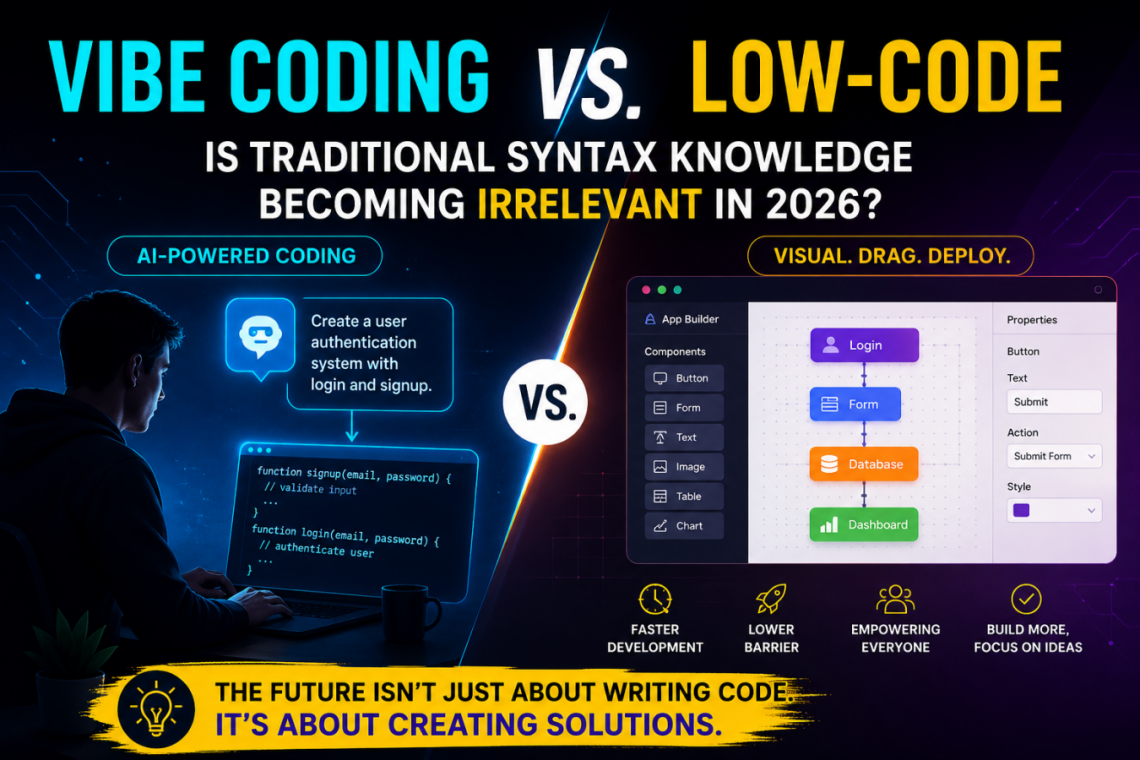
Introduction The way we build software is changing faster than ever. In 2026, developers are no longer judged solely by how well they write syntax-heavy code. Instead, a new paradigm is emerging – Vibe Coding – where intent, creativity, and system thinking matter more than memorizing programming languages. At the same time, low-code and no-code […]
OpenAI Codex vs Claude for Coding (2026): The New AI Coding Shift
For a while, the AI coding conversation was simple: ChatGPT vs Claude One felt fast and flexible.The other felt structured and thoughtful. If you were learning to code with AI, that was your choice. But that conversation is changing. There’s a new contender that’s not just good at coding, it’s built for coding: OpenAI Codex […]
How to Use Claude for Coding (Beginner Guide to Building Apps with AI)
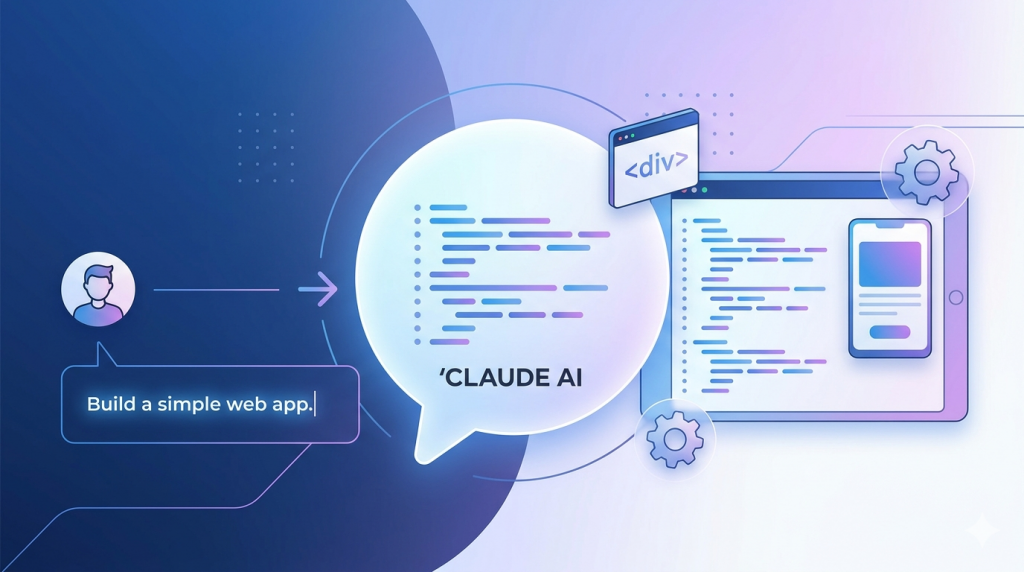
If you’ve ever tried learning to code, you know how it usually goes. You start with motivation, open a tutorial, and within minutes you’re stuck on syntax, errors, or concepts that don’t make sense yet. That’s exactly why tools like Claude are becoming popular. Instead of learning everything first, you can now start building by […]